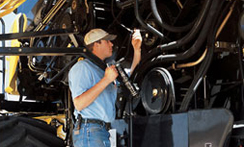
The most expensive hour of the year is the one where a combine stops in the middle of a good run with a storm two days out. Most of those stops are preventable, and most of them are preventable in July rather than September.
This is not a full service schedule. It is the list of things that actually strand machines in this part of the country.
Belts and chains
The ones that break are rarely the ones you can see easily. Pull the shields and look at the drives you do not normally look at.
What you are looking for: glazing, cracking on the inside of the belt where it bends, frayed edges, and any belt that is riding differently in the sheave than its neighbour. On chains, stiff links and uneven wear across the sprocket.
A belt that looks marginal in July will be a breakdown in September. Belts are cheap compared to a lost afternoon.
Bearings, by hand and by ear
Spin everything that turns. Any roughness, any play, any bearing that feels different from the one doing the same job on the other side is worth replacing now.
Bearings generally give warning before they fail, but the warning happens while you are running and cannot hear anything over the machine. Find them in the shop.
The cleaning shoe, properly
Climb in. Look at the chaffer and sieves for bent fingers, plugged sections and anything left over from last season. Check that the adjustment actually moves the full range and that what the monitor says matches what the sieve is doing.
Air leaks in the shoe are the quiet capacity thief. Any gap where air escapes before it reaches the sieve is air you paid for and did not use.
Concaves and rasp bars
Worn threshing components change how the machine behaves at every setting. If your concave has done a lot of acres, the clearance number on the monitor no longer means what it meant when the machine was new, which is why settings that worked three seasons ago may not work now.
Worth assessing honestly rather than hoping.
The header, which gets least attention and does most damage
- Knife sections and guards, for chips and wear
- Knife drive, for play
- Reel tines, for missing and bent ones
- Draper belts, for tracking and tension
- Auger flighting and finger timing
- Skid shoes and header height sensing, since a header that does not read the ground correctly either leaves crop or picks up dirt
Header loss in canola can exceed everything the rest of the machine loses combined, and almost all of it traces back to something on this list.
Electrical and sensors
Moisture sensors, yield monitors, loss sensors and header height sensors all drift and all fail quietly. A yield map built on a sensor that was wrong all season is worse than no map, because you will make decisions from it.
Calibrate before harvest, not after.
The fire prevention item nobody enjoys
Blow the machine down properly, particularly around the engine, exhaust and any bearing that runs hot. Combine fires in dry conditions move fast and the dollars are not the worst part.
Keep the extinguishers charged and where someone can actually reach them from the cab.
Parts worth having on the farm
The calculation here is simple: what would it cost to sit for a day waiting for a part, against the cost of having it on the shelf?
For most operations that means the belts specific to your machine, common bearings, knife sections and guards, and the filters you will need mid-season. Your parts department can tell you what actually gets ordered in a hurry each September, which is the most useful list there is.
Book it before everyone else does
Service departments across this region fill up in August. A pre-harvest inspection booked in July gets done on your schedule; the same call made in September joins a queue behind everyone who did not book.
Our service teams cover Paradise Hill, Lloydminster and North Battleford.
Book a service appointment or order parts.


